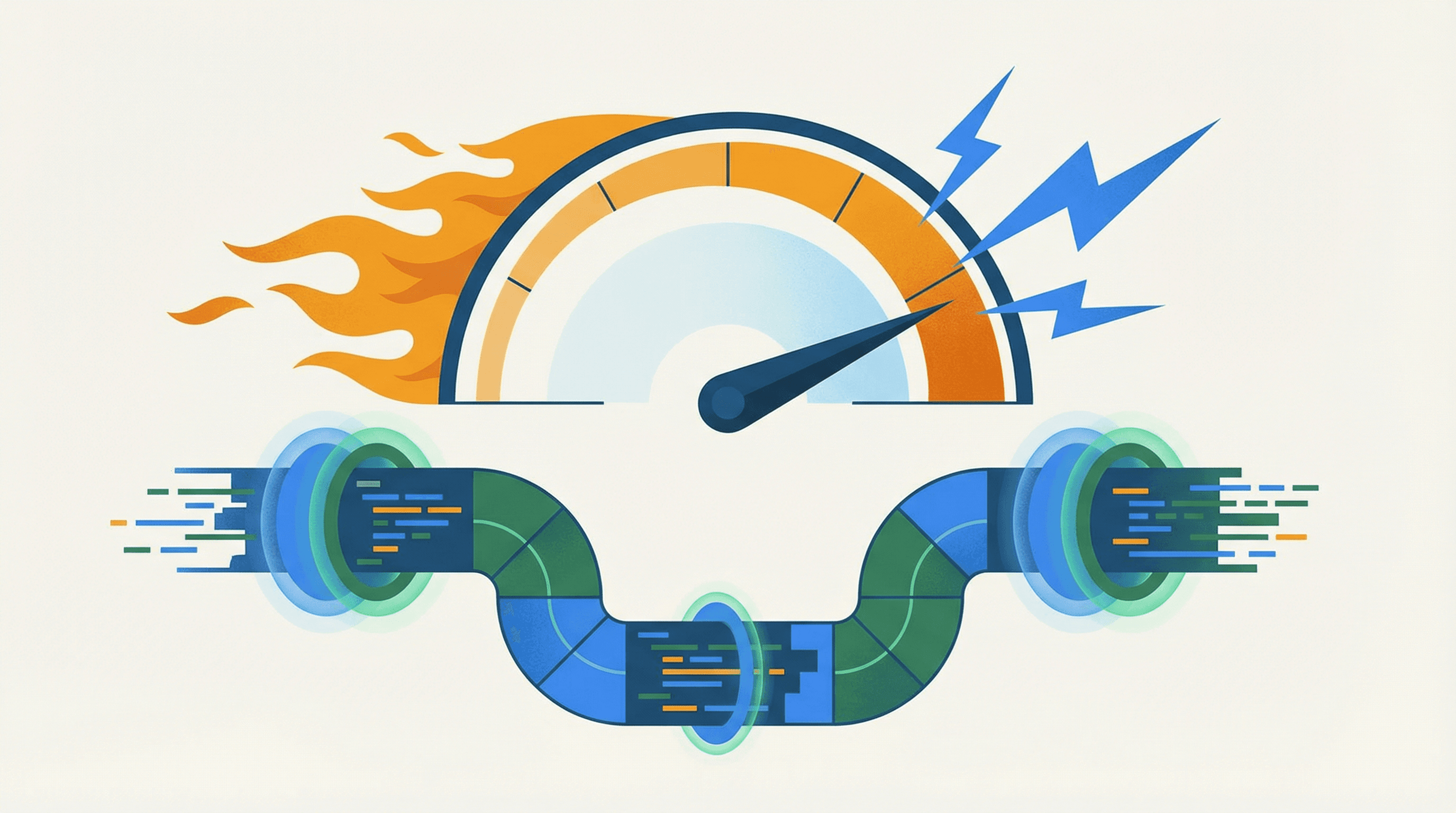
Every 100 milliseconds of added latency costs measurable revenue. Google found that a 0.5-second delay in search results reduced traffic by 20%. Amazon calculated that every 100ms of latency cost them 1% in sales. Performance is not a nice-to-have — it is a business requirement.
At KodexApps, performance engineering is baked into every project from day one. Here are the advanced techniques we use to keep applications fast at scale.
Database Performance: The Foundation
Most performance problems originate in the database layer. Before optimizing your frontend or adding caching, look at your queries.
Query Optimization
Explain everything. Run EXPLAIN ANALYZE on every query that executes more than once per request. Look for sequential scans on large tables, nested loop joins, and excessive row estimates.
Index strategically. Indexes are not free — they speed up reads but slow down writes. Create composite indexes that match your most common query patterns, and drop unused indexes regularly.
Batch, do not loop. The classic N+1 query problem is still the most common performance killer. Use eager loading, DataLoader patterns, or materialized views to eliminate redundant round trips.
Partition large tables. When a table exceeds tens of millions of rows, time-based or range-based partitioning can dramatically improve query performance by reducing the search space.
Connection Management
Database connections are expensive resources. A single PostgreSQL connection consumes about 10 MB of memory. At scale, connection pooling with tools like PgBouncer or built-in pool managers is essential. We typically configure:
Transaction-level pooling for stateless API servers
Read replicas for reporting and analytics queries
Connection limits per service to prevent any single consumer from starving others
Frontend Performance: Perceived Speed
Users perceive performance subjectively. A page that loads in 2 seconds but shows content progressively feels faster than one that loads in 1.5 seconds but shows nothing until completion. This insight drives our frontend optimization strategy.
Critical Rendering Path
Minimize blocking resources. Inline critical CSS, defer non-essential JavaScript, and use font-display: swap to prevent layout shifts.
Prioritize above-the-fold content. Use Next.js streaming and Suspense boundaries to render the visible portion first while loading the rest asynchronously.
Optimize images aggressively. Use WebP/AVIF formats, responsive srcset attributes, and lazy loading for below-the-fold images. A single unoptimized hero image can add 2-3 seconds to load time.
Bundle Optimization
JavaScript bundle size is the single biggest controllable factor in frontend performance. Our approach:
Tree-shake aggressively — ensure dead code elimination works by using ES modules
Code-split by route — each page should only load the JavaScript it needs
Audit dependencies quarterly — a single bloated library can add hundreds of kilobytes
Use dynamic imports for heavy components (charts, editors, maps) that most users never see
Caching: The Performance Multiplier
Caching is the highest-leverage performance optimization available, but it is also the most commonly misimplemented. The key is understanding your cache invalidation strategy before you start caching.
CDN caching for static assets and ISR (Incremental Static Regeneration) pages
Application caching with Redis for computed results, session data, and rate limiting
Database query caching for expensive aggregations that do not change frequently
Browser caching with appropriate Cache-Control headers and service workers for offline support
There are only two hard problems in computer science: cache invalidation and naming things. Get the first one right, and performance problems largely solve themselves.
Measuring What Matters
Performance optimization without measurement is guesswork. We track these metrics on every project:
Core Web Vitals — LCP (Largest Contentful Paint), INP (Interaction to Next Paint), CLS (Cumulative Layout Shift)
Time to First Byte (TTFB) — server response time, typically targeting under 200ms
API p95 latency — the 95th percentile response time, because averages hide problems
Error budget — the percentage of requests that can exceed SLA targets before we intervene
At KodexApps, we believe that Dream. Develop. Innovate. applies to performance as much as features. We dream about the ideal user experience, develop with performance as a first-class concern, and innovate on optimization techniques as new tools and patterns emerge.
If your application is slower than it should be, or if you are building something new and want to get performance right from the start, let us help. Our engineering team has deep experience in performance optimization across the entire stack.