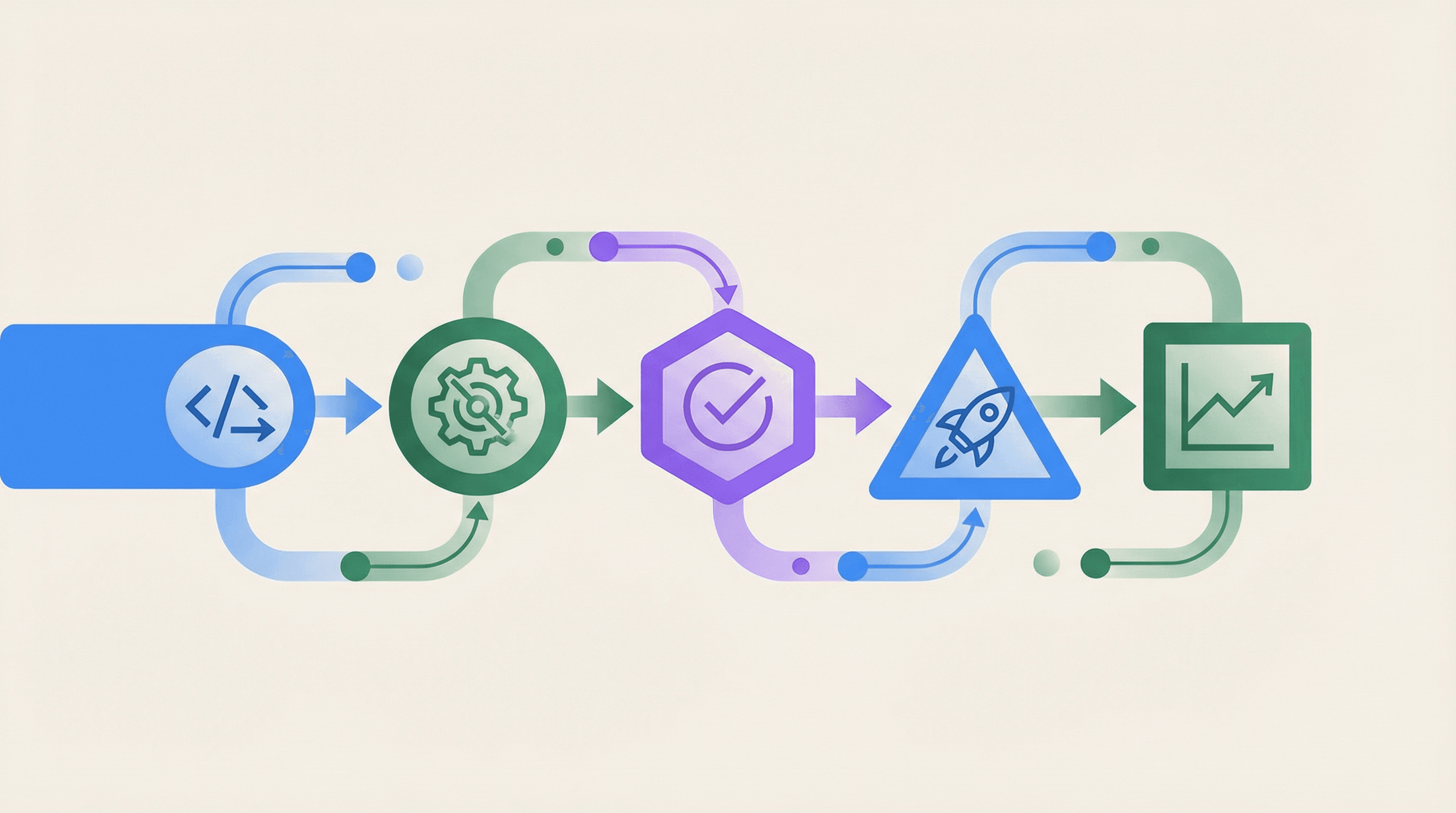
A CI/CD pipeline is only as good as the confidence it gives you. If your pipeline takes 45 minutes, flakes 10% of the time, and breaks on Fridays, it is not a pipeline — it is a bottleneck. Here is how we build pipelines that teams actually trust.
The Speed Imperative
A pipeline under 10 minutes keeps developers in flow. Over 20 minutes, they context-switch and lose momentum. Over 30 minutes, they start skipping it.
Parallelize aggressively. Run linting, type checking, unit tests, and integration tests concurrently
Cache everything. Node modules, build artifacts, Docker layers, test databases
Run only what changed. Use tools like Turborepo or Nx to detect affected packages in a monorepo
Split test suites. Run fast unit tests first; slow E2E tests can run in parallel or after merge
Test Strategy for CI
Not all tests belong in every pipeline run. We use a tiered approach:
On every push: Linting, type checking, unit tests (under 5 minutes)
On pull request: Above plus integration tests, visual regression tests (under 15 minutes)
On merge to main: Full E2E suite, performance benchmarks, security scans
Nightly: Extended test suites, dependency vulnerability scans, load tests
Deployment Patterns
Blue-Green Deployments
Run two identical production environments. Deploy to the inactive one, verify it works, then switch traffic. Instant rollback is just switching back.
Canary Releases
Route a small percentage of traffic (1-5%) to the new version. Monitor error rates and performance. Gradually increase traffic if metrics look healthy. Roll back automatically if thresholds are breached.
Feature Flags
Decouple deployment from release. Ship code to production behind a flag, enable it for internal users first, then gradually roll out. This separates the risk of deployment from the risk of a feature.
The Rollback Plan
Every deployment should have a documented rollback procedure. For database migrations, this means writing both up and down migrations. For API changes, this means maintaining backward compatibility for at least one release cycle.
Reliable pipelines are how we Dream. Develop. Innovate. at pace — we dream about zero-downtime deployments, develop the automation to achieve them, and innovate on pipeline speed as our projects grow.